Efficiency in the supply chain plays a critical role in ensuring that industrial operations remain stable and competitive. Starting from sourcing raw materials to delivering the finished products, supply chain affects the reliability and costs.
A small delay occurring in one region directly impacts the production happening somewhere else. Thus, a supplier issue builds up before anyone notices it. By the time it shows up in the reports, the damage is usually done.
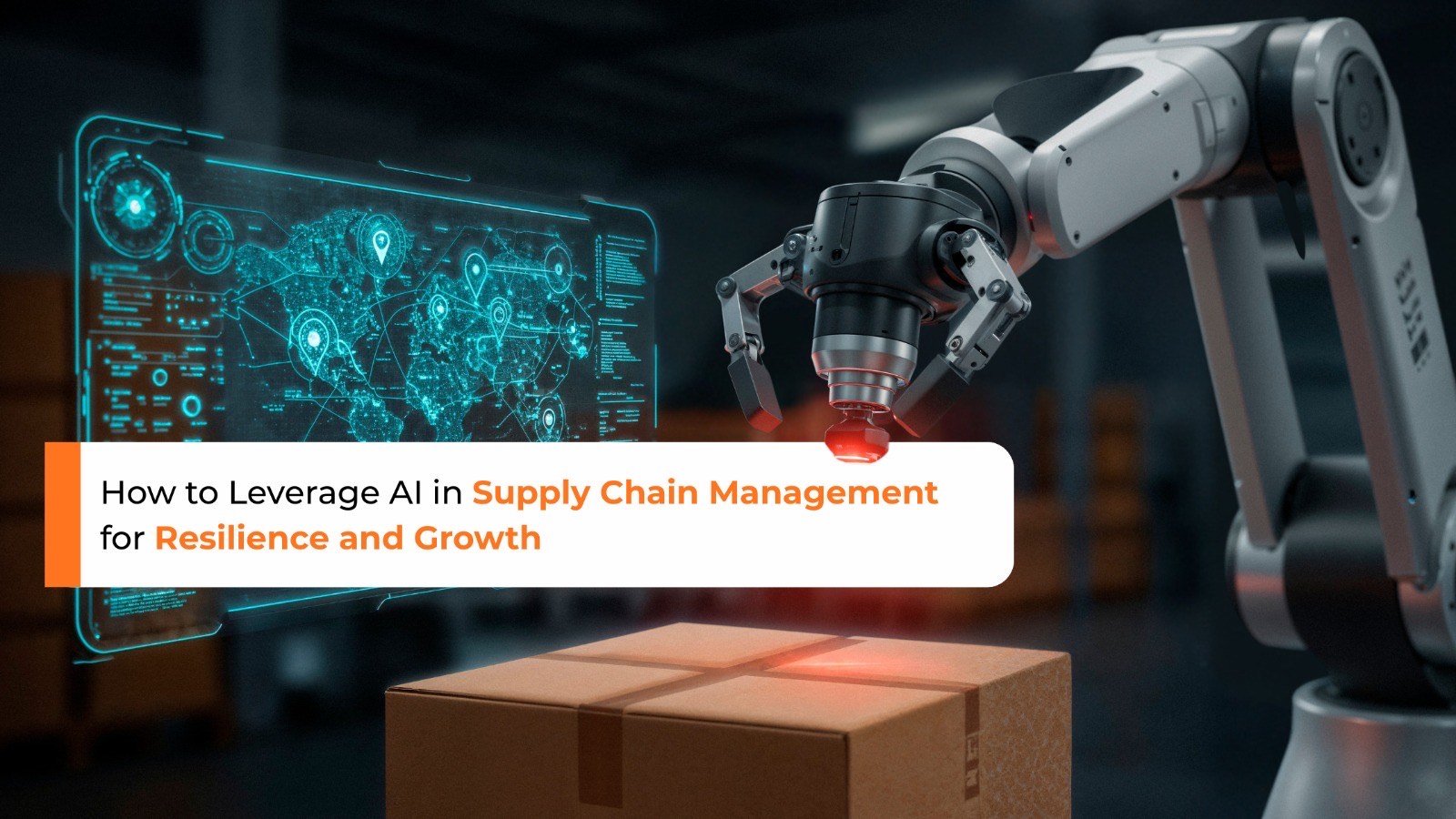
That’s the reason why many companies are now looking forward to integrating AI in supply chain. It is not just considered a technology upgrade, but treated as a practical support layer. In this blog, we will explore in detail how AI is amplifying supply chain optimization.
Understanding Supply Chain Challenges
Even with rigorous planning, tools, and dashboards, supply chains still face severe gaps when it comes to execution.
Some of the common issues are-
- Limited visibility among primary suppliers
- Disruptions get detected too late
- Information sitting in different system which don’t connect
- Decisions happening based on historical data instead of real-time changes
In the end, the challenge is not just data availability. It is also about the speed of response and clarity. That’s where AI and supply chain management are emerging to be useful in critical operations.
How AI is Changing Supply Chain Operations
Artificial intelligence is not going to replace the supply chain systems. It will be used to make key decisions to improve productivity and efficiency. Here’s how.
Faster Disruption Response
Supply chain optimization with AI plays an important role in delays and shortages. It can detect patterns and suggest alternative suppliers or routes quickly. This will reduce downtime impact significantly.
Real-time Visibility Across Operations
Instead of waiting for the reports,AI tools can process live data from the transport systems, warehouses, and suppliers. It improves the overall reaction time during disruptions. AI detects early warning signals such as:
- Port congestion
- Weather disruption
- Supplier delays
- Equipment failures
- Transportation bottlenecks
It helps companies to react earlier, adjust production plans, and inform customers early.
Smarter Production Planning and Scheduling
In process industries, production planning is directly connected to the plant constraints. Critical factors like capacity limits, maintenance schedule, and utility availability should be considered.
AI in supply chains enables planners to test multiple production scenarios before making decisions. In this way, it helps the teams to:
- Reduce unplanned shutdowns
- Avoid bottlenecks
- Balance production with demand changes
- Improve overall plant utilization
This improves plant stability while reducing costly rescheduling.
Supplier Collaboration and Visibility
There are many supply chain disruptions that occur at the supplier level. AI helps in improving collaboration by:
- Monitoring supplier performance
- Predicting delivery risks
- Recommending alternative sourcing
- Creating shared visibility across the network
This helps businesses move from linear supply chains to connected supply ecosystems.
Intelligent Logistics and Route Optimization
Transportation costs are increasing globally. Factors such as driver shortages, fuel prices, and congestion are one of the major challenges.
Supply chain optimization with AI helps-
- Predict shipment delays early
- Optimize transportation routes
- Consolidate shipments efficiently
- Reduce transportation costs
These improvements often deliver quick and measurable savings.
Energy-Aware Supply Chain Decisions
Energy costs have become a major driver of production economics. Running a plant during peak energy pricing can significantly increase operating expenses.
AI in supply chain can incorporate energy pricing, utility availability, and production demand into a single planning framework. This allows companies to align production schedules with favorable energy conditions.
For energy-intensive industries, this is becoming a major advantage.
Why Practical Implementation is Important for AI-Driven Supply Chains
Many AI initiatives fail because they focus only on analytics and ignore real plant constraints. Models may generate recommendations that look good on paper but are difficult to implement in practice.
This is where engineering and process expertise become critical. Successful initiatives combine advanced analytics with a deep understanding of industrial operations.
Organizations like Ingenero work with industries to identify practical use cases, connect operational data, and integrate AI into real production workflows. This ensures that digital initiatives deliver measurable results rather than remaining pilot projects.
Conclusion
With regular improvements, AI and supply chain management are becoming more dynamic and interconnected. Curating plans based on past trends is no longer sufficient. AI enables companies to improve coordination, anticipate disruptions, and make better decisions across the entire value chain. With strong engineering expertise, Ingenero supports companies to become resilient, build efficiency, and prepare for future challenges.
FAQ
1. What are the biggest challenges companies face in supply chain management today?
Nowadays, supply chains have become complex and interconnected. Companies struggle with limited visibility across suppliers, delays in detecting disruptions, and systems that are incapable of communicating with each other.
2. How does AI help in supply chain optimization?
AI in supply chain optimization helps teams to make better and faster decisions, analyzing large amounts of data, it reduces inefficiencies, improves forecasting, and balances supply and demand in a more accurate manner.
3. Can AI detect supply chain disruptions before they cause damage?
Yes. AI models monitor critical signals like demand changes, supplier changes, transport issues, etc., to highlight risks at the earlier stages. This provides the team with sufficient time to adjust production schedules, sourcing, and logistics before disruption starts affecting operations.
4. How does AI improve real-time visibility across supply chain operations?
AI in supply chain optimization helps in improving real-time visibility as it brings data from multiple data systems into one view. It comprises details on suppliers, plant operations, inventory, and logistics. Thus, instead of looking at different reports, teams easily get a detailed understanding in real time.
5. What role does AI play in production planning and scheduling?
AI helps in optimizing production planning by balancing plant capacity, resource availability, and demand. It can test different scheduling options and suggest the best ones, which is helpful in reducing delays and downtime. In process industries, it improves planning accuracy, which is extremely critical.